
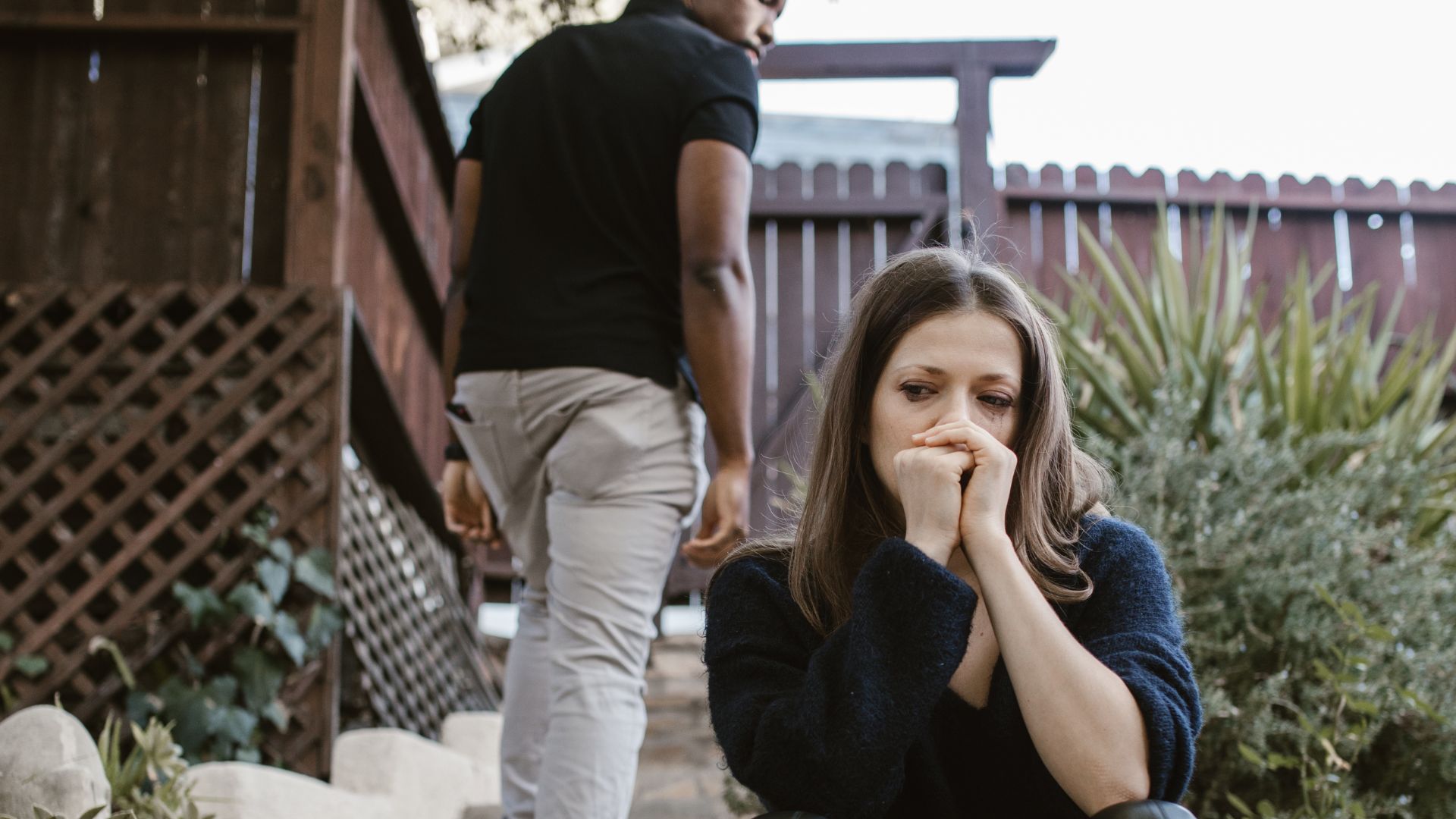
You can share your everyday life with someone, make plans together, and spend time side by side, yet still feel deeply alone. This kind of loneliness can be particularly confusing in a romantic relationship, where we often expect to find understanding, closeness, and emotional support.
Feeling lonely in a relationship does not necessarily mean that love has disappeared. Sometimes, it reflects a growing distance between partners: a difficulty sharing what we feel, feeling understood, or experiencing genuine emotional connection.
Understanding where this distance comes from can be the first step towards reconnecting with ourselves and with our partner.
Loneliness Is Not Just About Being Alone
We often associate loneliness with physical isolation. However, loneliness can also arise in the presence of someone we love. What matters is not only whether another person is there, but whether we feel emotionally connected to them.
We may feel lonely when our experiences are dismissed, when conversations remain focused on practical matters, or when we struggle to express our needs without fearing conflict or misunderstanding.
Emotional connection involves feeling that our inner world matters to the other person: that our emotions are acknowledged, our thoughts are taken seriously, and we can be ourselves without constantly having to explain or justify who we are.
When We No Longer Feel Understood
One of the most painful aspects of emotional distance is the feeling that our partner no longer truly sees us. We may talk frequently without feeling heard, share our worries without receiving the response we need, or stop opening up because previous attempts have left us disappointed.
Over time, these experiences can affect how safe we feel expressing ourselves. We might begin to minimise our emotions, avoid difficult conversations, or tell ourselves that it is better not to expect too much.
Sometimes, partners care deeply about one another but express care in different ways. One person may seek conversation and reassurance, while the other responds by offering practical solutions or withdrawing to avoid conflict. Neither response necessarily indicates a lack of love, but the difference can leave both people feeling misunderstood.
The important question is not simply whether we care about each other, but whether we can recognise and respond to each other’s emotional needs.
The Cycle of Emotional Distance
Emotional distance can gradually become a self-reinforcing pattern. When one partner feels disconnected, they may seek more reassurance, initiate difficult conversations, or express frustration. The other partner may experience these attempts as criticism or pressure and respond by becoming defensive or withdrawing.
The more one person pursues connection, the more the other may retreat. The more one withdraws, the more alone and insecure the other may feel.
Eventually, both partners can become caught in a pattern that leaves little room for curiosity, understanding, or vulnerability. One may feel rejected, while the other feels inadequate or overwhelmed.
Recognising this pattern can help shift the focus from blaming one another to understanding what happens between you. It does not mean that both partners are always equally responsible, nor does it excuse harmful behaviour. Rather, it can help identify whether a different way of communicating and responding is possible.
How Can We Rebuild Emotional Connection?
Reconnecting does not necessarily require dramatic gestures or immediate solutions. Often, it begins with small changes in how partners listen, communicate, and respond to each other.
1. Identify what you are missing. Instead of focusing only on what your partner does or does not do, try to identify the need underneath your feelings. Are you longing for affection, reassurance, shared time, recognition, or more meaningful conversations?
2. Express your experience without turning it into an accusation. Describing your feelings can create more space for dialogue. For example, saying “I miss feeling close to you” may invite a different response than “You never care about me.” This does not mean suppressing anger or avoiding accountability; it means communicating in a way that makes your experience easier to understand.
3. Make room for genuine listening. Listening does not always mean agreeing or immediately finding a solution. Sometimes, the most helpful response is to ask questions, acknowledge the other person’s feelings, and try to understand their perspective before offering advice.
4. Create moments of connection. Everyday routines can gradually take over a relationship. Setting aside time to talk without distractions, sharing an activity, or asking each other how you are really feeling can help restore a sense of closeness. Small, consistent gestures often matter more than occasional grand gestures.
5. Notice whether the effort is mutual. Rebuilding connection requires the willingness of both partners to listen, reflect, and make changes. You can communicate your needs and contribute to the relationship, but you cannot create emotional intimacy entirely on your own.
What If the Distance Does Not Improve?
Sometimes, despite attempts to reconnect, the feeling of loneliness persists. Conversations may repeatedly lead to conflict, emotional needs may remain unacknowledged, or one partner may be unwilling to engage with the difficulties in the relationship.
In these situations, it can be helpful to reflect on what the relationship currently offers, what you need in order to feel emotionally safe and connected, and whether there is room for change.
Psychological support can offer an opportunity to explore these questions, recognise recurring relational patterns, and better understand your own needs and boundaries. It can also help you clarify what you would like to change, regardless of whether your partner is ready to participate.
It is important to distinguish emotional distance from situations involving intimidation, coercive control, threats, or violence. In these circumstances, the priority is safety and appropriate support, rather than simply trying to improve communication.
Being Close Means Being Able to Be Yourself
A meaningful relationship does not require constant agreement or the absence of difficult moments. Differences and misunderstandings are a natural part of sharing our lives with another person.
What matters is whether there is enough emotional space to express those differences, repair misunderstandings, and remain curious about one another, even when things are difficult.
Feeling lonely in a relationship can be an invitation to pause and reflect on what is happening between you. It may be an opportunity to open a conversation, recognise an unmet need, or reconsider what emotional connection means to you.
You do not have to dismiss your feelings simply because you are not physically alone. Your need to feel heard, understood, and emotionally connected deserves attention.
If you would like to better understand your experiences and the challenges you face in your relationships, psychological support can offer a space to reflect, explore your emotions, and begin to make sense of what you are going through. Discover how I can support you.
References
Reis, H. T., Clark, M. S., & Holmes, J. G. (2004). Perceived partner responsiveness as an organizing construct in the study of intimacy and closeness. In D. J. Mashek & A. Aron (Eds.), Handbook of Closeness and Intimacy (pp. 201–225). Lawrence Erlbaum Associates.
Arican-Dinc, B., & Gable, S. L. (2023). Responsiveness in romantic partners’ interactions. Current Opinion in Psychology, 53, 101652.
Sease, T. B., et al. (2024). Loneliness and Relationship Well-Being: Investigating the Mediating Roles of Relationship Awareness and Distraction among Romantic Partners. Behavioral Sciences, 14(6), 439.